Little RoKoKids Daycare
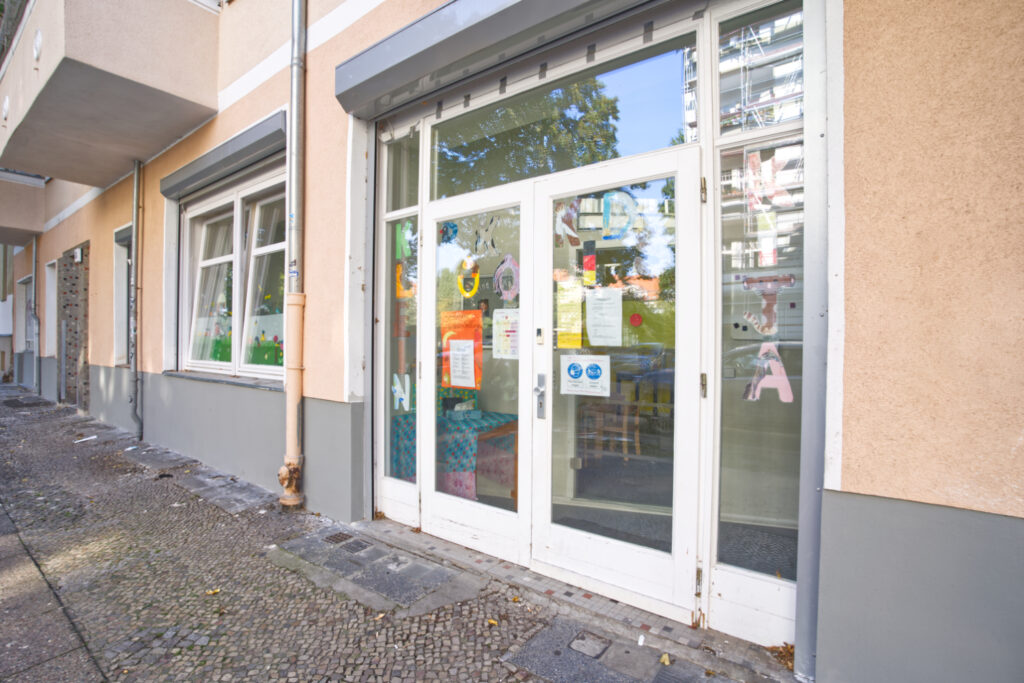
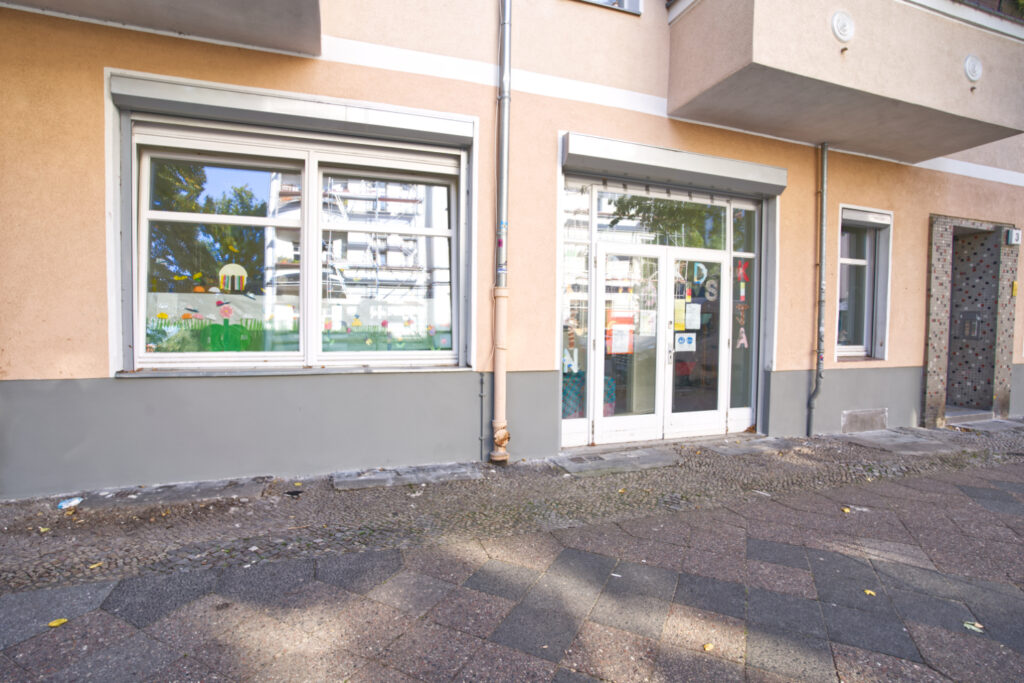
The small RoKoKids daycare center is located on the ground floor of a residential building on a cul-de-sac in Berlin’s Mitte district, in the Wedding neighborhood. In the fenced-in courtyard of the neighboring building, there is a garden with a playground that is also used by the daycare center.
After a 5-minute walk, we arrive at Schillerpark, which features various playgrounds, a wading pool, a small toboggan run, and large lawns. In about 20 minutes on foot, we reach Volkspark Rehberge, which features animal enclosures, among other things. A bus stop (Bus 120) and the Rehberge subway station are located nearby. Müllerstraße, with its various shopping options and the post office, is just a 5-minute walk away.
History
The Neighboring Daycare Center: The RoKoKids Daycare Center, operated by Ki. E. Ka. e. V., has been in operation since April 2006. Due to high demand, another daycare center—the Kleine RoKoKids Daycare Center—was established in the neighboring building. The fundamental idea behind its founding was to provide families with support in achieving a harmonious balance between work and family life. We are currently open Monday through Friday from 7:00 a.m. to 5:00 p.m. Having a job and pursuing a career should not preclude the desire to have children. That is how the nonprofit association got its name:
Ki. E. Ka. e. V. = Children, Education, Career.
While searching for partners, the Robert Koch Institute (RKI)—which places a high priority on family-friendly personnel policies—quickly joined us. The RKI has reserved 10 spots for its employees at our facility. In addition, we can provide care for five children during professional conferences.
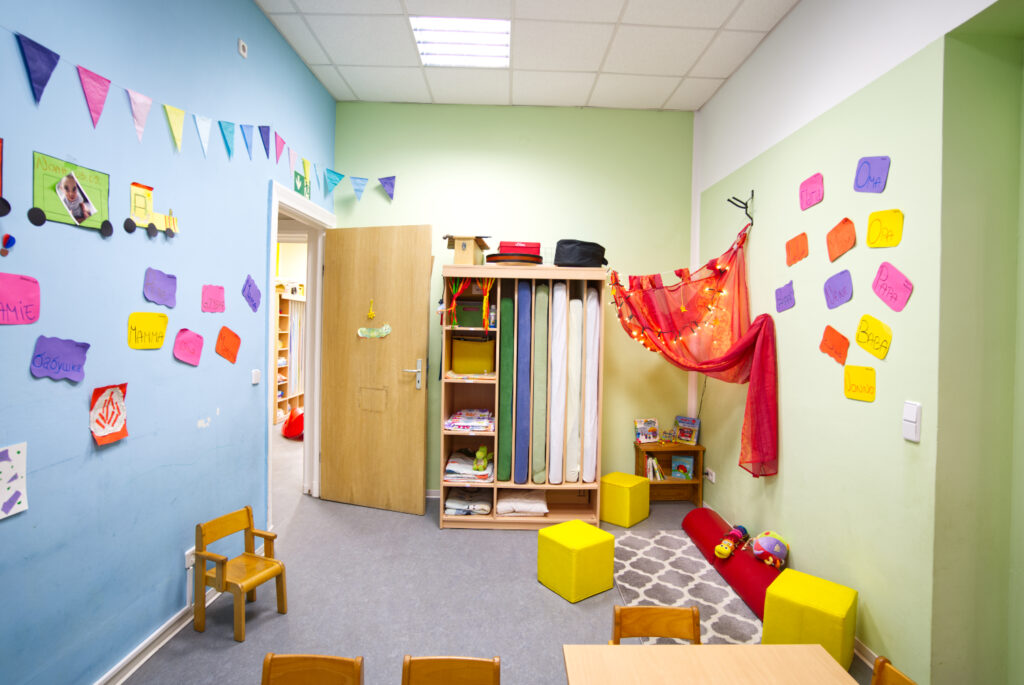
Thanks to its location in the Wedding neighborhood and the fact that our parents come from many other city districts, the RoKoKids daycare center is a place of diversity and multiculturalism. We address this with special language and cultural programs.
Since August 2006, we have been a German-Italian bilingual daycare center. German and Italian are offered as languages of interaction.
rooms
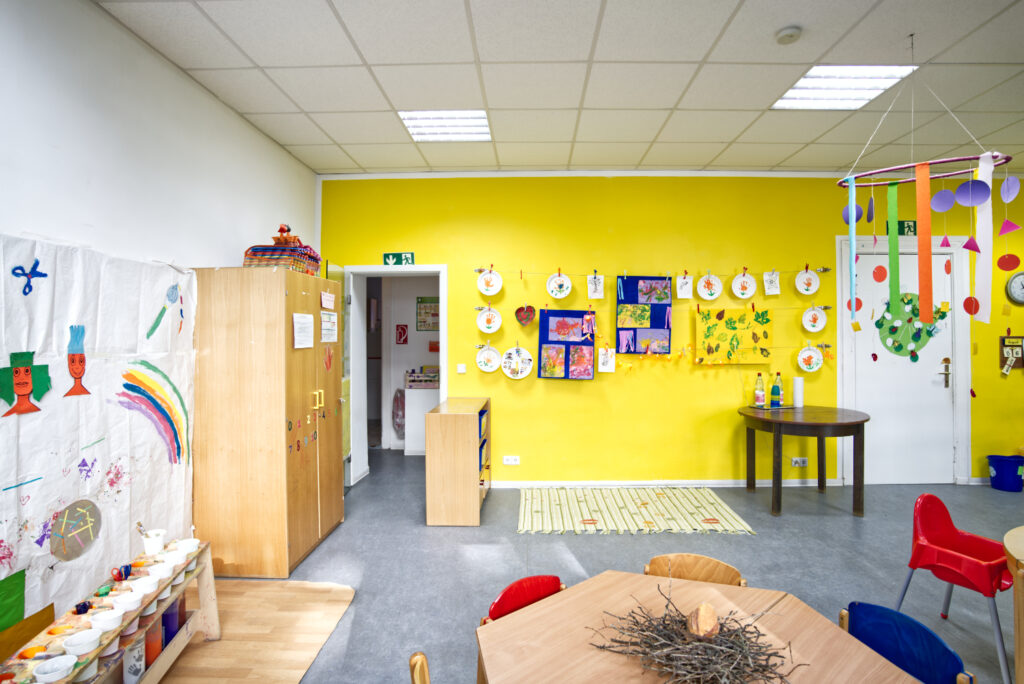
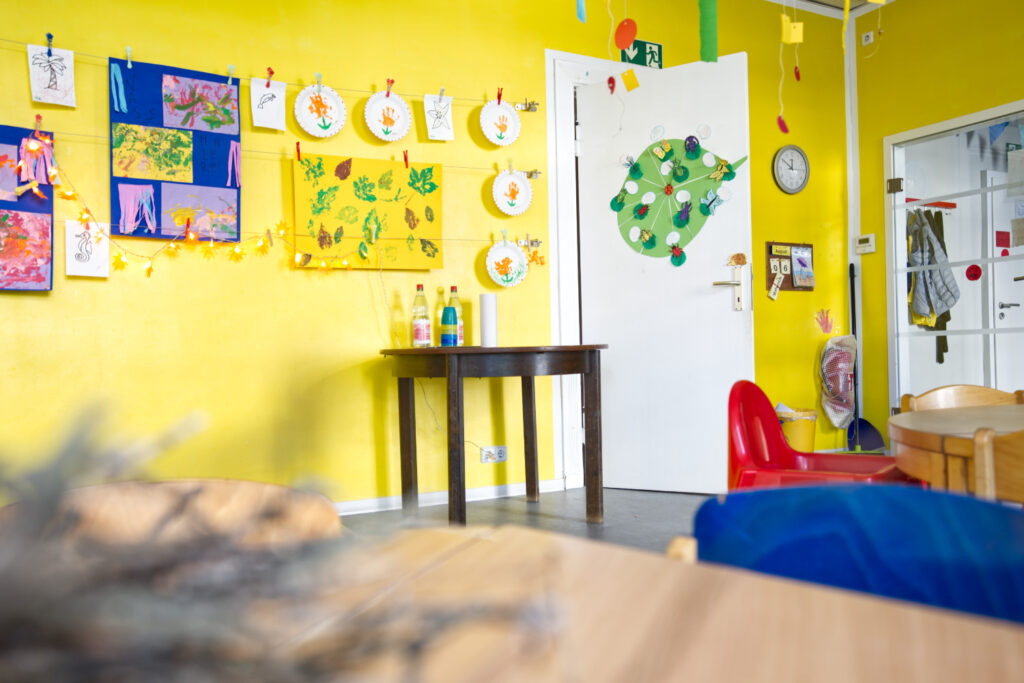
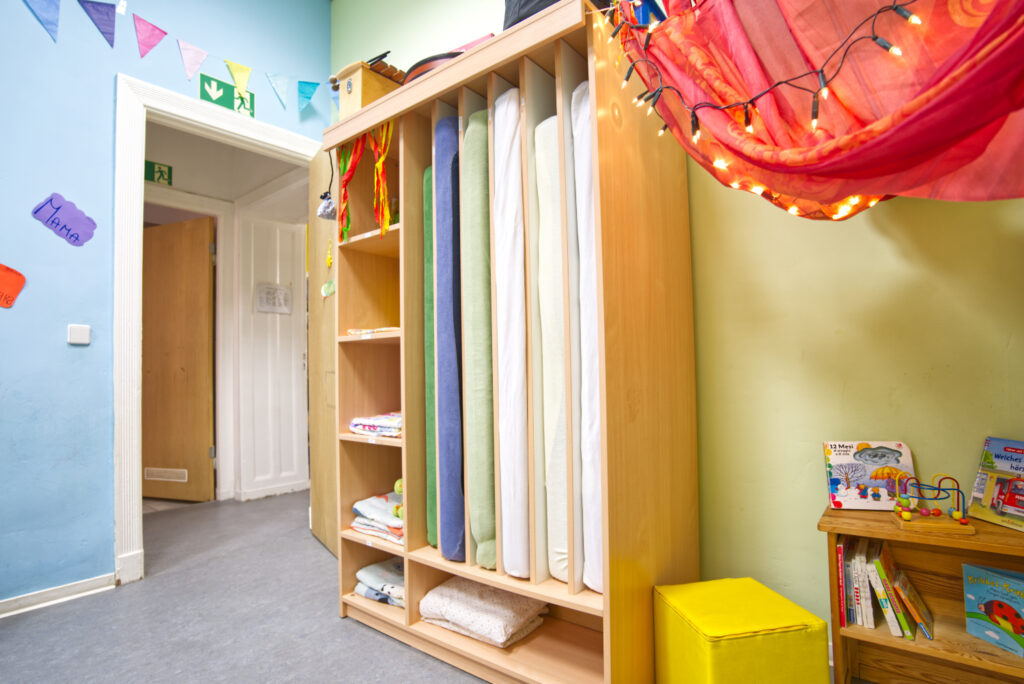
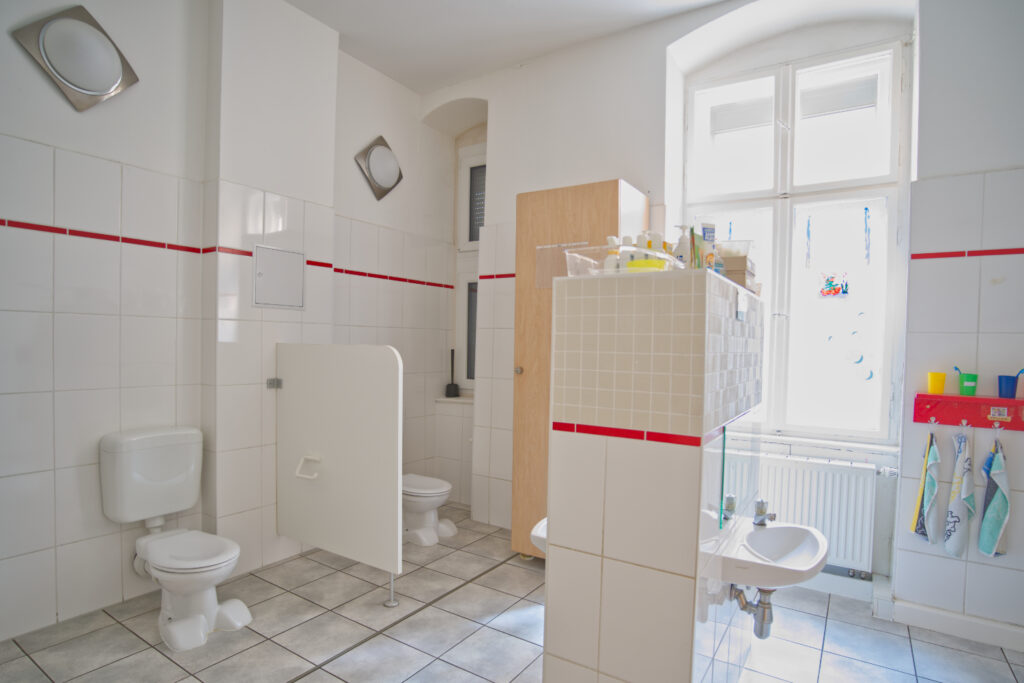
The facility has a total area of approximately 113 m²
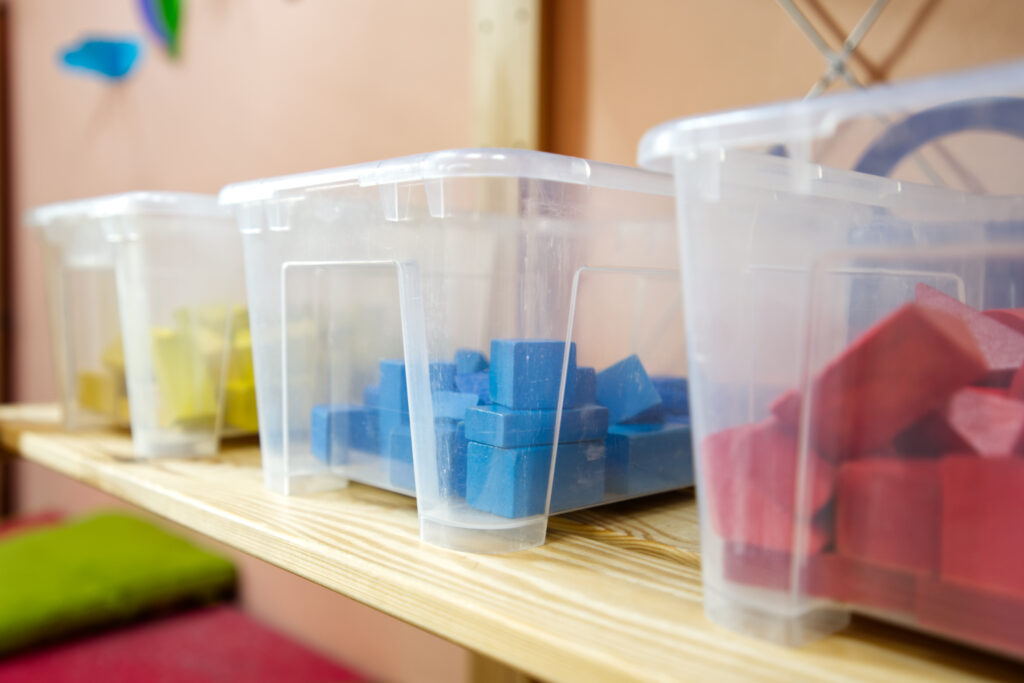
Three group rooms for two groups
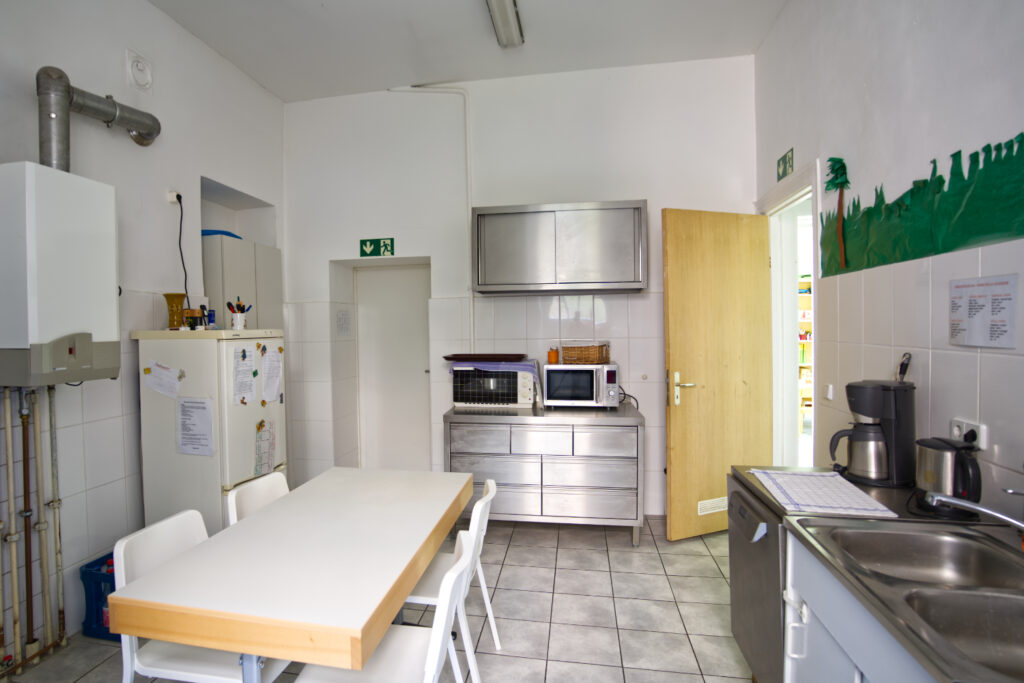
A distribution kitchen with a staff area
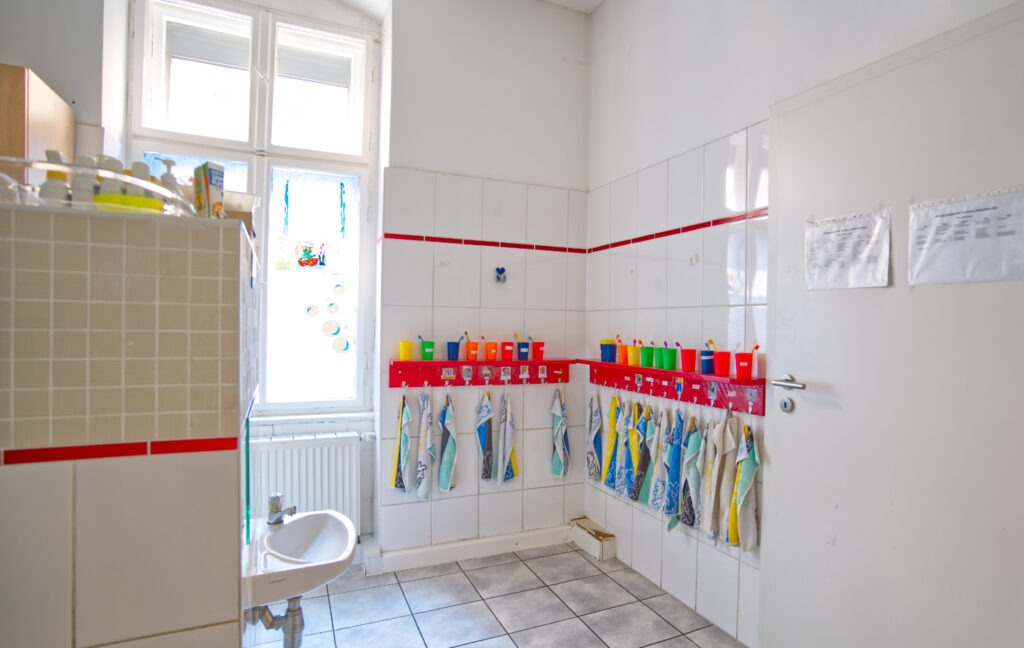
A coat rack
A children's bathroom with a sink, shower, and toilets
A restroom for staff and parents
The rooms comply with the technical and content requirements of the State of Berlin.
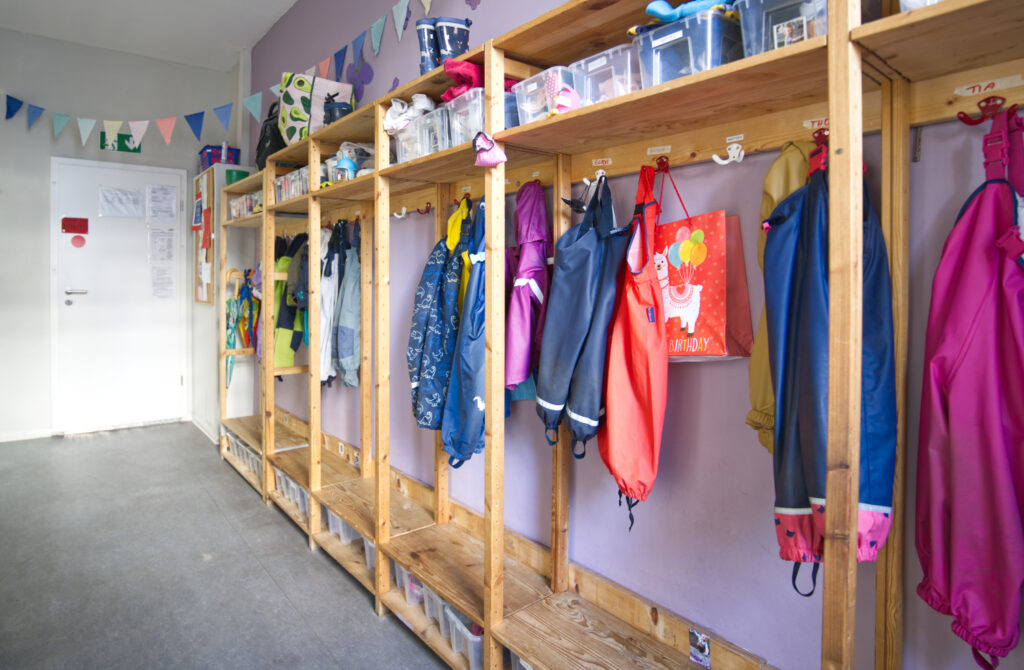
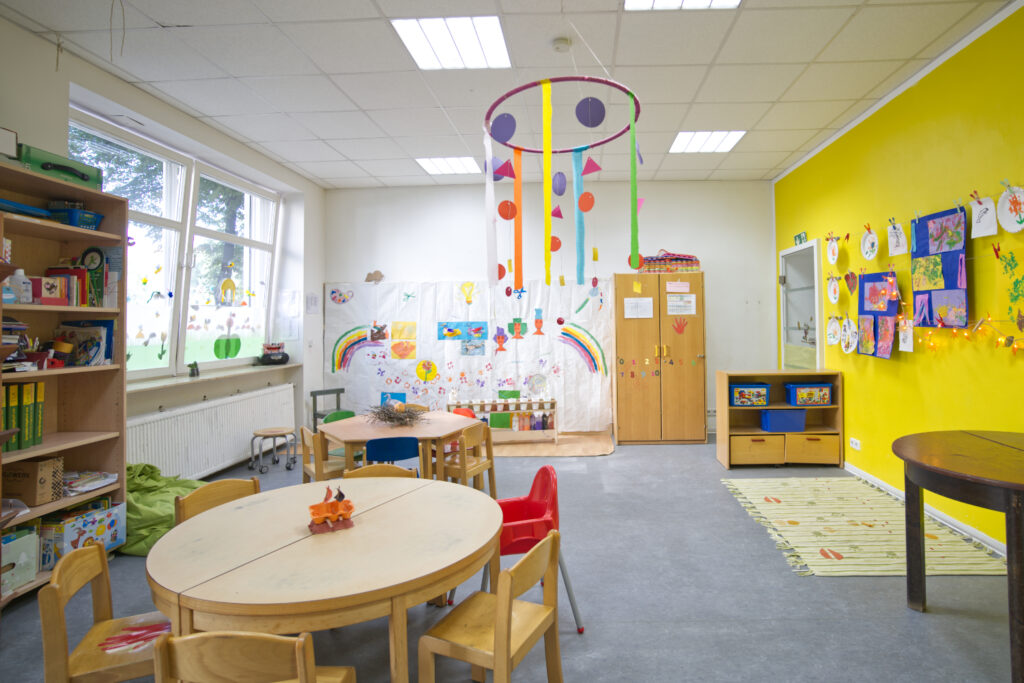
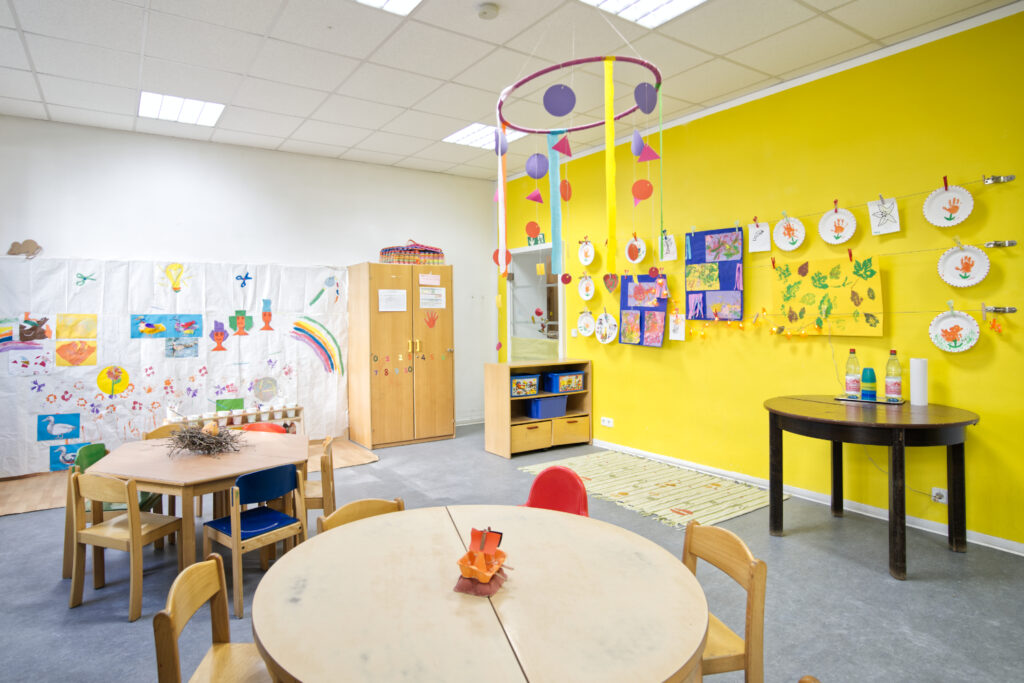
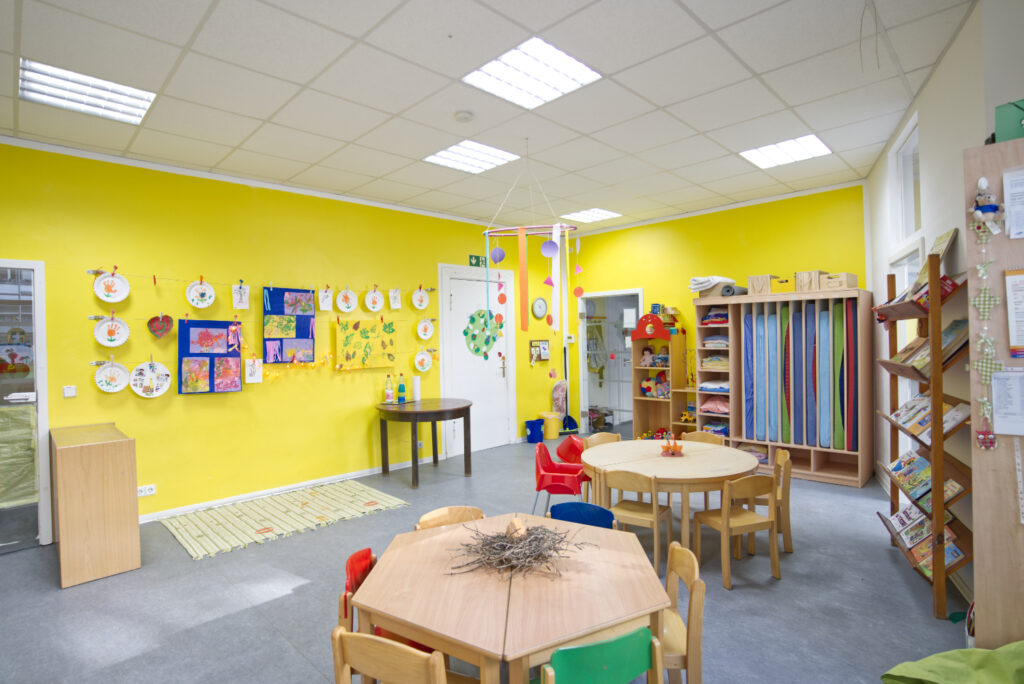
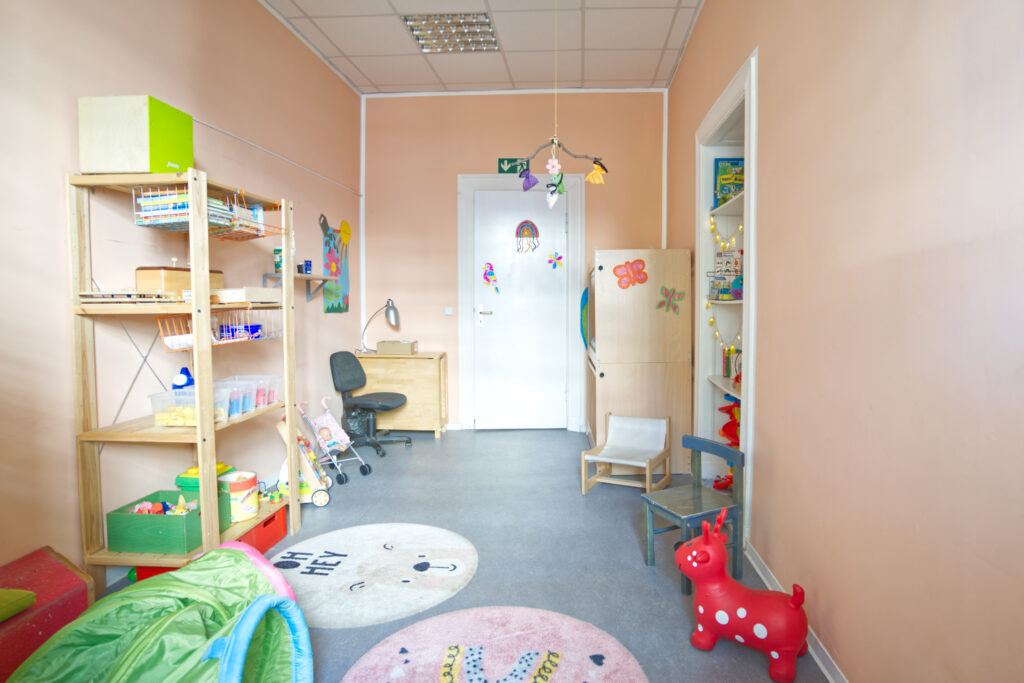
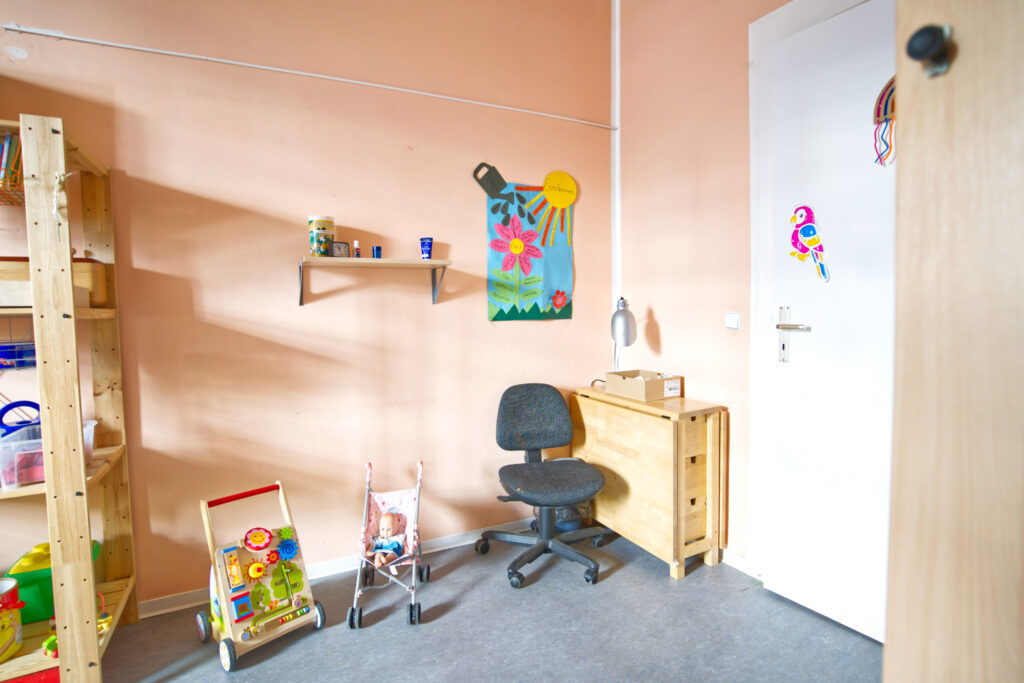
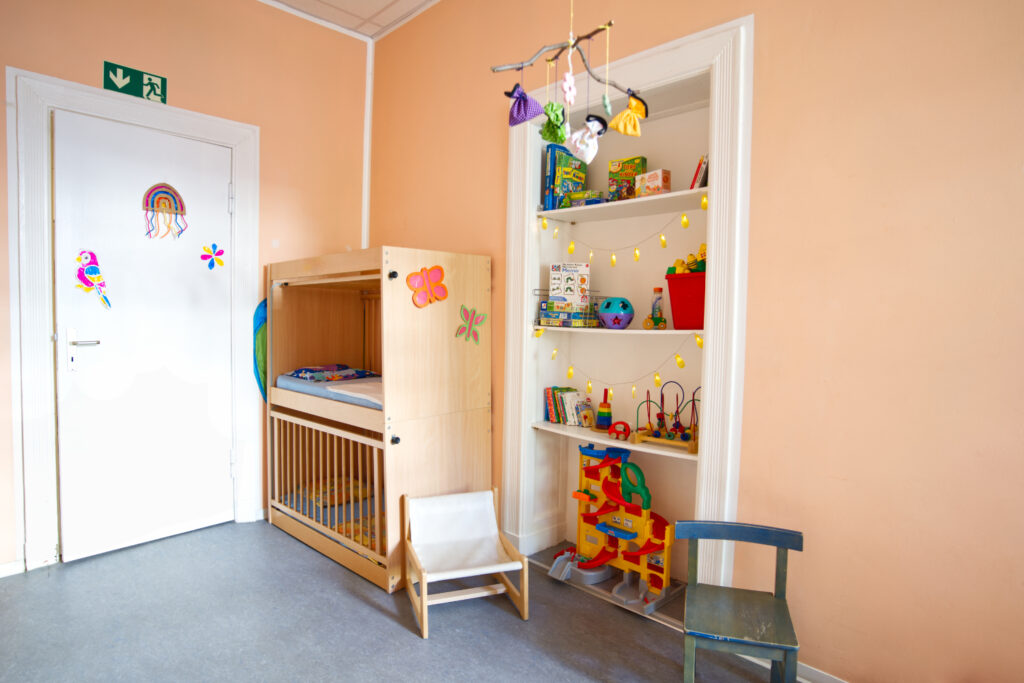
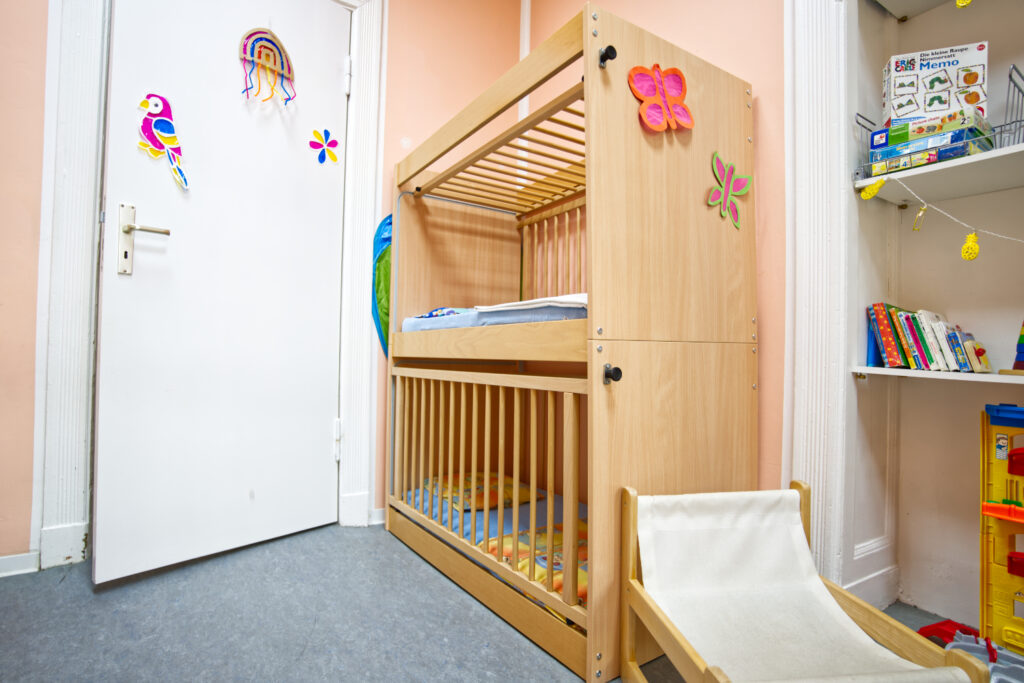
group size
The Kleine RoKoKids Daycare Center cares for up to 20 children ranging in age from eight weeks to about 3 years, divided into two groups of 10 children each.
Class 1: approx. 0–1.5 years
Class 2: approx. 1.5–3 years
Starting at around 3 years of age, children typically transfer to the RoKoKids daycare center next door in August.
Hybrid Preschool
By the concept of the “hybrid preschool,” we mean a model that is not rigidly defined but, because of its dynamic structure, offers a range of possibilities. While the outdoor environment provides the educational context, the focus is on an experience-based learning approach that fosters not only the children’s cognitive development but also their emotional, physical, and social development.
The model can be summarized in ten guiding principles:
- LIVE in the present moment, in adventure, in unspoiled nature, and in a society that shapes us.
- LISTEN to the silence, to nature, to the other person.
- APPRECIATE the diversity, the seasons, the unexpected, and the mistakes.
- Be ENTHUSIASTIC about the little things, about the changing seasons, about the joy of life, about everything you are.
- TRUST yourself , nature, other people, and your instincts.
- Play freely by getting dirty, letting off steam, and having fun together with the others.
- SLOW DOWN your days, in tune with nature, at your own pace.
- DISCOVER your world, the treasures of the Earth, your limits, and your talents.
- DARE to make mistakes and learn from them, measure yourself against the world around you, grow together, and challenge yourself.
- ACT with awareness , freedom, vitality, and ease.
Bilingual education
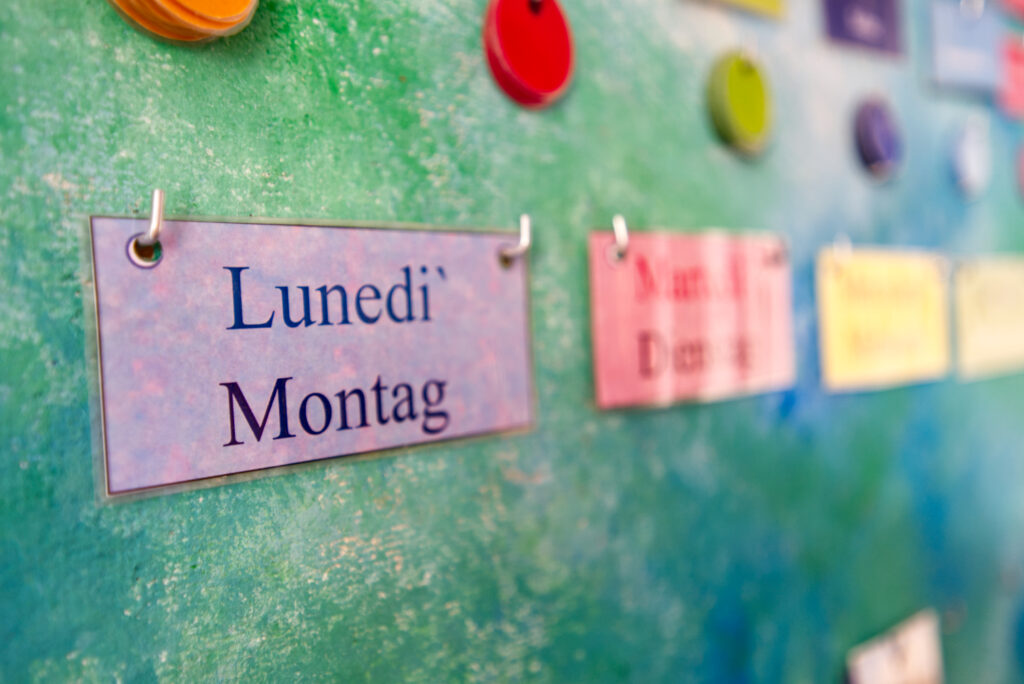
At our daycare center, German and Italian are offered as languages of interaction. Each language is permanently assigned to one person, following the principle: “One person, one language.”
This approach makes it possible to teach both languages through natural, everyday interaction. This happens from the very beginning, regardless of the children’s age. Language must be integrated into the activity, and what is said must be supported by gestures, actions, and pointing.
Educational materials (books, games, CDs, etc.) are available in both languages; programs, activities, morning circles, and projects are conducted in the language of the teacher leading them.
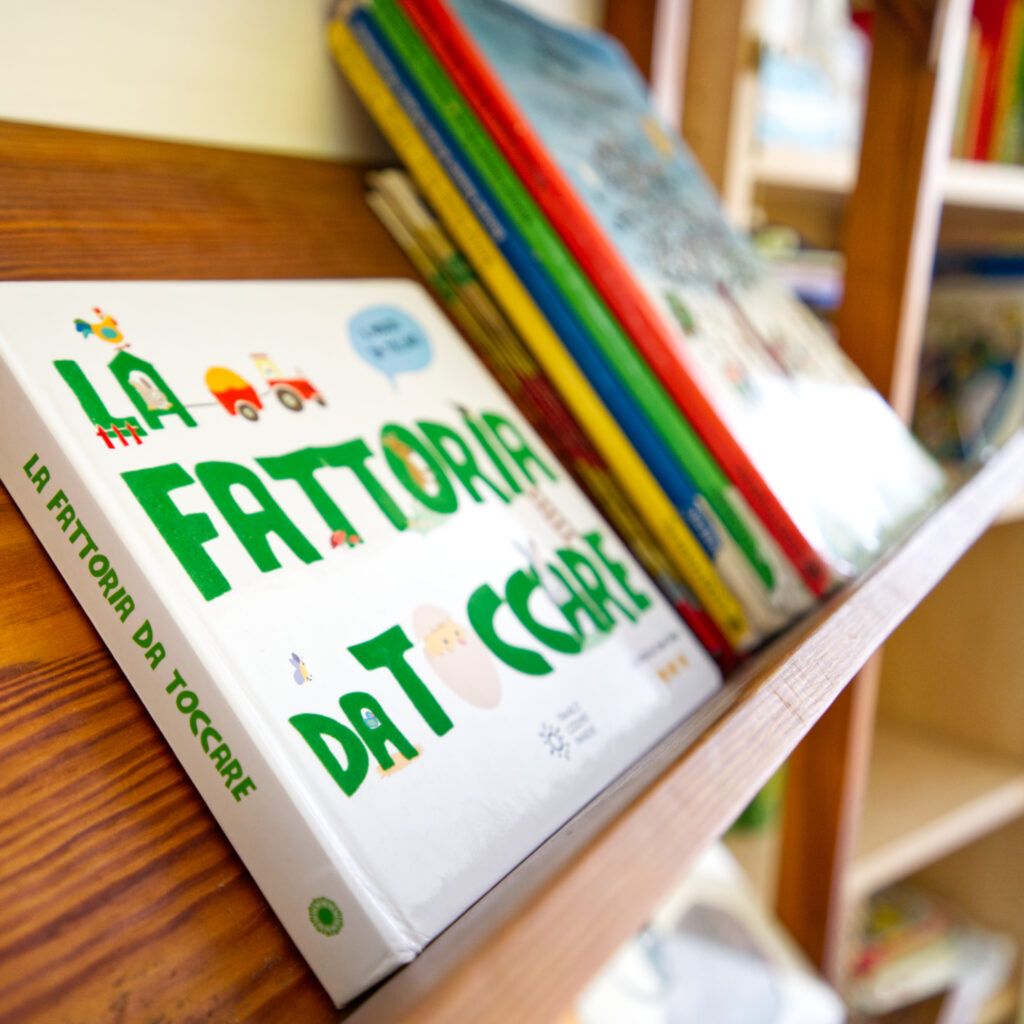
The daycare center hosts Italian projects and workshops.
The educational and instructional program is supported by an administrative body and is intended to enrich the Italian language education offerings for German-speaking children as well, in order to facilitate and support their enrollment in bilingual elementary schools in Berlin.
February–May 2024: Project title “Il mago delle onde” (The Magician of the Waves)
This is an in-depth study of the life and discoveries of the Italian Guglielmo Marconi, the father of radio and the figure who made communication as we know it today possible. The workshop begins with a preparatory listening segment that involves reading specific children’s texts about Guglielmo Marconi’s inventions and is conducted in parallel with a creative activity in which children can express their skills and acquire new ones.
October 2024–February 2025: Project title "Cibo, città, sostenibilità" (Food, City, Sustainability)
This year, our pilot project was dedicated to sustainable nutrition and consisted of alternating classroom instruction and cooking workshops. In the cooking workshop, the children learned about the importance of healthy eating and cooked recipes using regional and seasonal 0-km products. The concept of sustainability and the importance of reducing water and energy consumption were also explained to the children. This project was conducted in Italian to enable the development of specialized vocabulary.
December 2025–April 2026: Project title "Cibo, benessere e sostenibilità" (Food, Well-being, and Sustainability)
Next year, we will focus on Italian cuisine with an emphasis on sustainability and well-being. We view cooking as a cultural heritage that fosters community, tradition, and mindful enjoyment. As a bilingual German-Italian daycare center with children from diverse cultural backgrounds, we will use this theme specifically to promote cultural openness while playfully expanding the children’s Italian vocabulary in everyday life. The diversity of regional dishes represents a vibrant, ever-evolving culinary identity that centers on exchange, diversity, and shared experiences.
Aesthetic and Artistic Education
Children create pictures through their thoughts, emotions, and senses. They are an expression and a record of their interests and imaginations. Furthermore, these pictures serve as a means through which children seek to communicate something to adults and other children.
The children’s artwork is given special recognition at the daycare center. This encourages them to take great care in creating their artwork. Most of the pieces are displayed on the walls, organized by theme and aesthetic appeal, and accompanied by photos of the creative process, the children’s own words, captions, and brief comments.
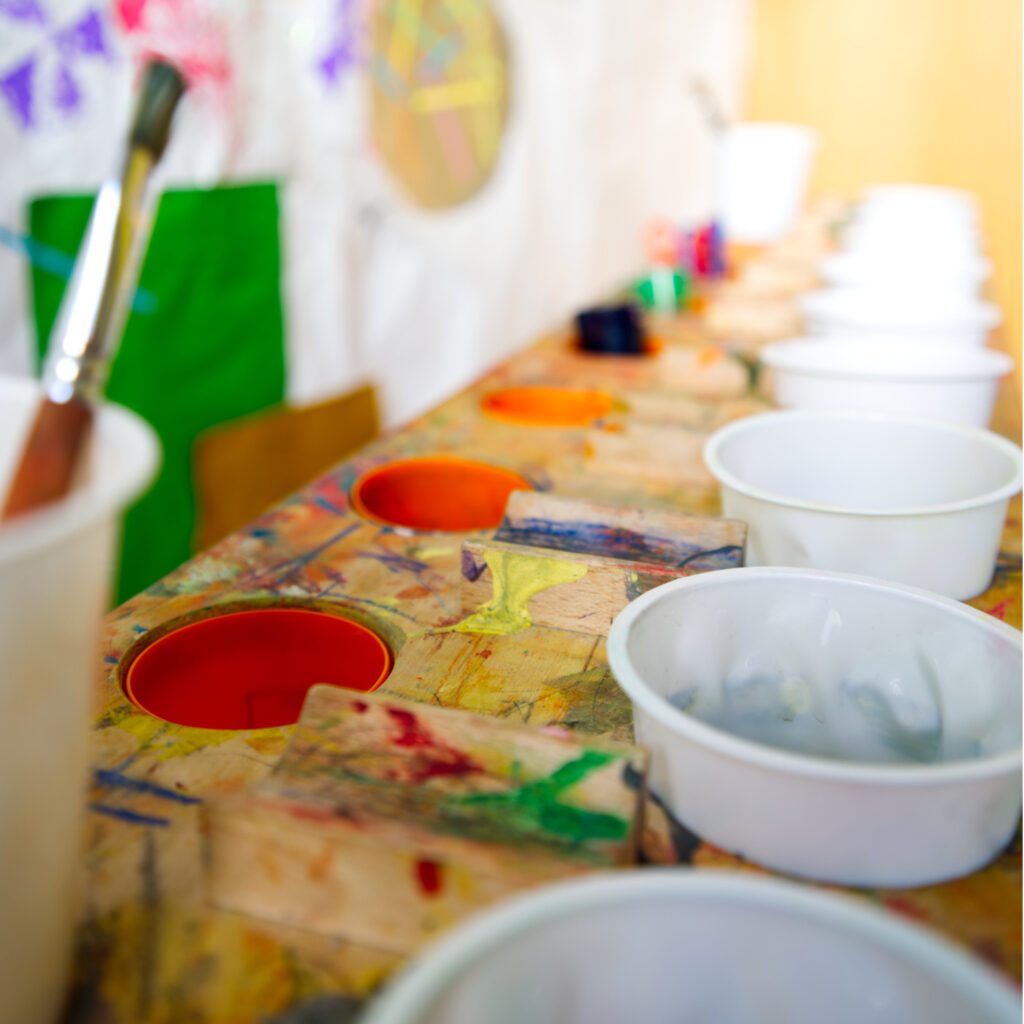
The children are given the opportunity to experiment with a wide variety of materials. It’s not just the final product that matters, but also the process of getting there.
During this stage of development for children under three, the focus is on painting and scribbling, shaping, and playing with mud, since they are not yet able to create representational art. As a result, different techniques and materials are used than those for older children.
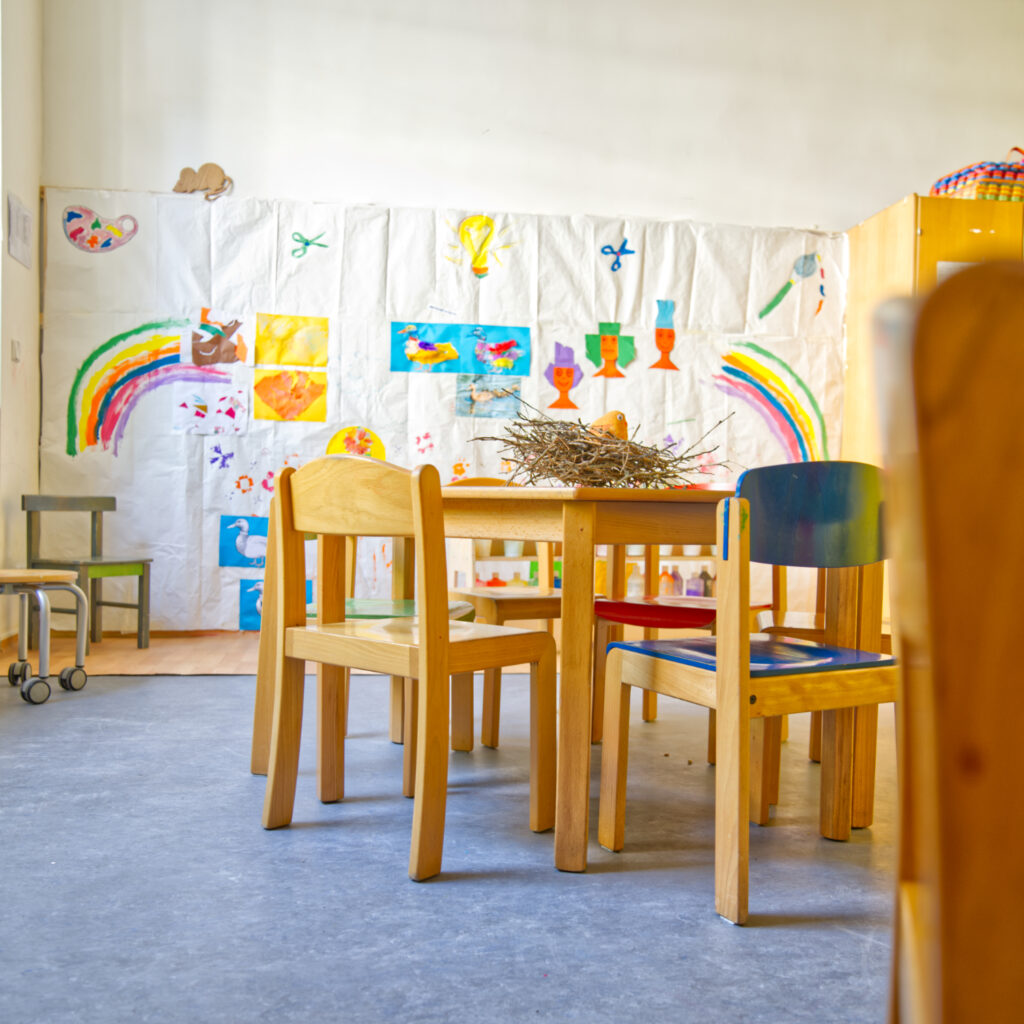
Creating with all the senses and the whole body is of the utmost importance, especially for children in daycare, and requires space. To accommodate this need, an art wall with an accompanying area was designed. This area is regularly used in small groups for aesthetic and artistic education.
health promotion
Through supplementary and collaborative activities at the daycare center, children should acquire the foundations for a healthy, natural lifestyle in a playful manner as early as possible. In the process, they learn health-conscious behaviors by example and practice them.
“Getting Daycare Centers Moving”
The small RoKoKids daycare center is systematically and steadily developing into a high-quality, healthy daycare center over the long term. We participate in the state program, which supports us in this process through facilitator training, professional development opportunities, and financial resources.